Understanding RFID Table Software in Gaming Environments
RFID table software systems have transformed how casinos manage table game operations. These systems combine radio-frequency identification technology with backend software architecture to track chips, monitor game play, and generate real-time analytics. For casino operators and gaming facility directors, understanding the backend architecture proves essential when evaluating vendors, planning implementations, or troubleshooting system performance.
A robust RFID table system consists of multiple interconnected components: embedded table readers, chip antennas, edge computing units, central servers, and management dashboards. The backend architecture determines how efficiently data flows from physical table events to actionable business intelligence.
Core Components of RFID Backend Architecture
Edge Computing Layer
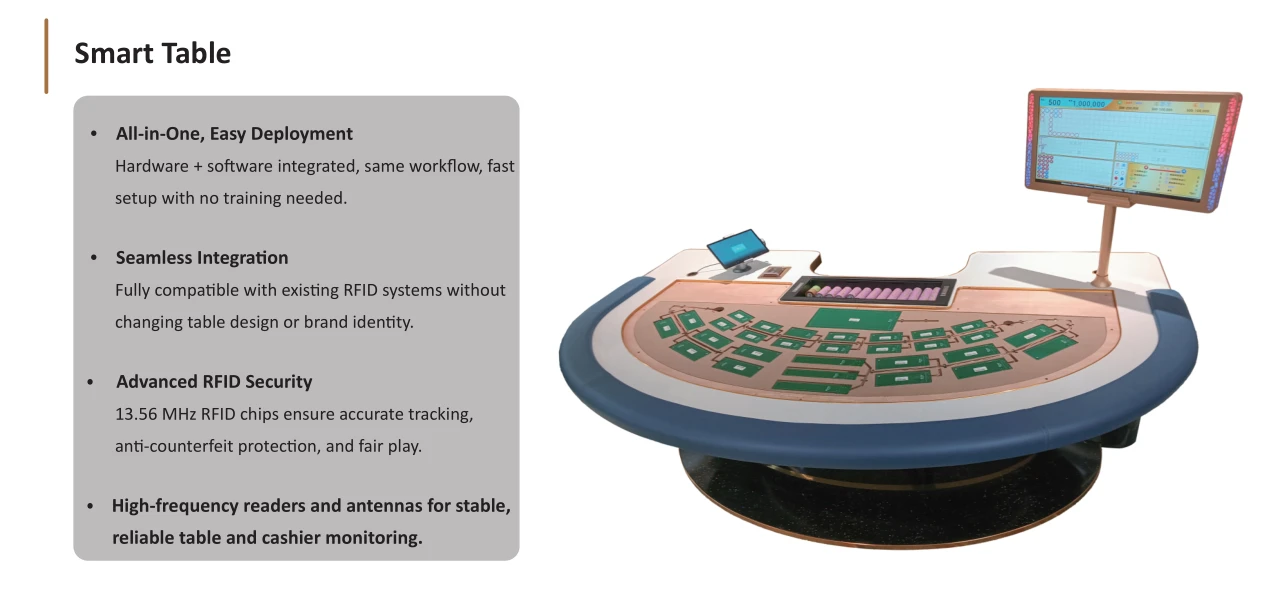
The edge computing layer sits closest to physical table operations. Each gaming table equipped with RFID technology contains embedded readers that detect chip movements at frequencies typically ranging from 13.56 MHz to 900 MHz depending on regional regulations. These readers process thousands of chip events per minute during peak gaming hours.
Edge devices perform initial data processing before transmitting to central servers. This local processing reduces network bandwidth requirements and enables real-time alerts for suspicious activities. Modern edge units typically feature ARM-based processors with 2-4 GB RAM, sufficient for running local event filtering, preliminary fraud detection algorithms, and buffering data during network disruptions.
Database Architecture
RFID table systems generate substantial transaction volumes. A mid-sized casino with 50 table games can produce 500,000 to 2 million RFID events per day. The backend database must handle these write loads while simultaneously supporting real-time queries for floor managers and analytical workloads for operations teams.
Most enterprise RFID implementations use a multi-tier database approach:
– **Operational Database**: TimescaleDB, InfluxDB, or similar time-series databases store raw RFID events with sub-second write latency
– **Analytical Data Warehouse**: Aggregated data moves to columnar stores like ClickHouse or Amazon Redshift for reporting and business intelligence
– **Cache Layer**: Redis or Memcached accelerates dashboard queries and real-time alerts
Data retention policies typically keep raw events for 90-180 days while aggregating historical data for long-term trend analysis.
API and Integration Layer
RFID table software rarely operates in isolation Casino RFID Reader Table. Casinos require integration with:
– Player tracking systems (Bally, IGT, Aristocrat)
– Casino management systems (CMS)
– Surveillance and security platforms
– Financial reconciliation systems
– Marketing and loyalty databases
REST APIs and WebSocket connections enable real-time data sharing between systems. Well-designed architectures implement message queues (Apache Kafka, RabbitMQ) to decouple services and ensure reliable message delivery during high-load periods.
Data Flow and Event Processing
Real-Time Event Pipeline
When a player places a bet, the RFID system captures multiple data points: chip denomination, stack height, exact position on the table layout, and timestamp. The backend processes this event through several stages:
1. **Ingestion**: Edge devices serialize events using Protocol Buffers or Apache Avro for compact transmission
2. **Validation**: Backend services validate event structure, check for duplicate transmissions, and flag anomalies
3. **Enrichment**: Events receive additional context from player tracking systems, dealer identification, and table assignment data
4. **Storage**: Validated events write to the operational database within 100-500 milliseconds
5. **Distribution**: Interested subscribers receive notifications via message queues for real-time dashboards and alerts
Batch Processing for Analytics
While real-time processing handles immediate operational needs, batch processing generates business intelligence. Nightly ETL (Extract, Transform, Load) jobs aggregate event data into metrics such as:
– Average bet size by game type and time period
– Table hold percentages and game pace metrics
– Player value scores based on betting patterns
– Chip movement anomalies indicating potential collusion or advantage play
Apache Spark or similar distributed computing frameworks process these workloads efficiently across casino-wide data volumes.
Security and Compliance Architecture
Data Encryption Standards
RFID systems handle sensitive financial and personal data. Backend architectures must implement encryption at multiple layers:
– **In-Transit Encryption**: TLS 1.3 for all network communications between edge devices and central servers
– **At-Rest Encryption**: AES-256 encryption for database storage with key management through hardware security modules (HSM)
– **End-to-End Encryption**: For player tracking data subject to GDPR, CCPA, or regional privacy regulations
Audit Trail Implementation
Gaming regulations in most jurisdictions require comprehensive audit trails. RFID backend systems log all database modifications, system configuration changes, and administrative actions. Immutable audit logs typically use append-only storage with cryptographic hashing to detect tampering attempts.
Regulatory compliance often mandates 7-year retention periods for transaction data. Architecture planning must account for these storage requirements, with many operators implementing tiered storage using hot SSD arrays for recent data and cold storage (tape or cloud archive) for historical records.
Access Control Architecture
Role-based access control (RBAC) limits system access based on job responsibilities. Pit bosses, floor managers, surveillance teams, and finance departments each receive tailored data visibility. Modern implementations integrate with Active Directory or LDAP for unified identity management across casino systems.
Performance Optimization Strategies
Handling Peak Loads
Casino operations experience significant load variations. Weekend evenings and special events generate traffic 3-5x higher than weekday afternoons. Backend architectures must scale accordingly:
– **Horizontal Scaling**: Kubernetes orchestration enables automatic pod scaling based on CPU and memory metrics
– **Database Sharding**: Distributing data across multiple database instances by table, pit, or time period
– **Read Replicas**: Separating read and write workloads improves query performance for dashboards and reports
Load testing during implementation should simulate peak conditions to validate capacity planning assumptions Macaumr.
Latency Optimization
Real-time decision support requires low-latency data access. RFID systems target dashboard refresh rates under 2 seconds and alert delivery within 5 seconds of event detection. Achieving these targets requires:
– Optimized database indexes on frequently queried fields
– In-memory caching of hot data sets
– Edge pre-aggregation reducing data volumes before transmission
– Geographic proximity between edge devices and processing servers for casinos with multiple properties
Monitoring and Observability
System Health Monitoring
Production RFID systems require comprehensive monitoring. Modern observability stacks typically include:
– **Metrics Collection**: Prometheus or Datadog collecting system metrics (CPU, memory, disk I/O, network throughput)
– **Log Aggregation**: Elasticsearch or Splunk centralizing logs from all system components
– **Distributed Tracing**: Jaeger or Zipkin tracking request flows across microservices
– **Alert Management**: PagerDuty or Opsgenie routing alerts based on severity and on-call rotations
Business Metrics Monitoring
Beyond system health, operators monitor business-specific metrics through custom dashboards:
– RFID read success rates by table and reader
– Chip tracking accuracy percentages
– Exception alert volumes requiring investigation
– System uptime and availability against SLA targets
Deployment Considerations
High Availability Architecture
Casino operations run 24/7 with minimal tolerance for downtime. Backend architectures implement redundancy at every layer:
– **Redundant Edge Devices**: Each table typically has backup readers that activate on primary failure
– **Database Replication**: Synchronous replication between primary and standby database servers
– **Application Failover**: Load balancers automatically route traffic from failed application instances
– **Geographic Redundancy**: DR (disaster recovery) sites in separate data centers or cloud regions
Target availability for enterprise systems typically exceeds 99.9%, translating to less than 8.7 hours of downtime annually.
Maintenance Window Planning
Despite high availability requirements, systems require maintenance for security patches, software updates, and hardware replacements. Backend architectures support rolling updates that maintain service availability during deployments. Maintenance scheduling typically occurs during lowest-traffic periods (early morning hours) with rollback procedures ready for unexpected issues.
Vendor Selection Criteria
When evaluating RFID table software vendors, casino operators should assess backend architecture against these criteria:
– **Scalability**: Can the system handle projected growth in table counts and transaction volumes?
– **Integration Capabilities**: What APIs and pre-built integrations exist for current and planned casino systems?
– **Compliance Support**: Does the architecture meet all applicable gaming regulations across operating jurisdictions?
– **Total Cost of Ownership**: Beyond licensing, what infrastructure and staffing costs does the architecture require?
– **Vendor Roadmap**: How does the vendor plan to evolve backend capabilities over the next 3-5 years?
Frequently Asked Questions
What database write throughput should a casino expect from RFID table systems?
A single gaming table generates 5,000 to 15,000 RFID events per hour during active play. A casino with 50 tables should provision database infrastructure capable of sustained write throughput of 250,000 to 750,000 events per hour, with burst capacity for peak periods reaching 1.5x normal volumes.
How do RFID systems integrate with existing player tracking platforms?
Integration typically occurs through REST APIs where player tracking systems provide player identification data that enriches RFID event records. Most vendors offer pre-built connectors for major platforms (Bally, IGT, Aristocrat) while custom integrations use documented APIs with webhook support for real-time data exchange.
What redundancy levels do gaming regulations require for RFID systems?
Requirements vary by jurisdiction, but most regulatory frameworks mandate real-time backup capabilities with maximum acceptable downtime ranging from 15 minutes to 2 hours. Many operators exceed minimums by implementing active-active architectures with automatic failover and recovery time objectives under 5 minutes.
How long does RFID event data retention typically extend?
Raw event data typically remains accessible for 90 to 180 days in operational databases. Aggregated analytics data persists for 7 years to meet regulatory requirements. Some jurisdictions mandate longer retention for anti-money laundering compliance, requiring architecture planning for storage costs and retrieval performance.
Can RFID backend systems process events from multiple casino properties centrally?
Yes, multi-property implementations use centralized data processing with edge devices at each property transmitting to a shared backend. This architecture requires careful network planning to ensure adequate bandwidth and latency management. Benefits include consolidated reporting, simplified maintenance, and cost efficiencies. Trade-offs include dependency on inter-property network reliability and potential latency for real-time dashboards at remote properties.